
The Snug journal
The Death of Swipe Culture
Swipe culture is collapsing as intentional daters demand clarity, support, and meaningful introductions instead of endless scrolling.
By Chase Croft ·

Journal #1 - The Death of Swipe Culture
In early 2025, I was walking with an investor while discussing the state of dating. Instagram was full of reels criticizing the opposite sex, people were in anguish, and many of my friends had opted out of the dating pool entirely. Was there going to be a rebound, or was this as good as it gets?
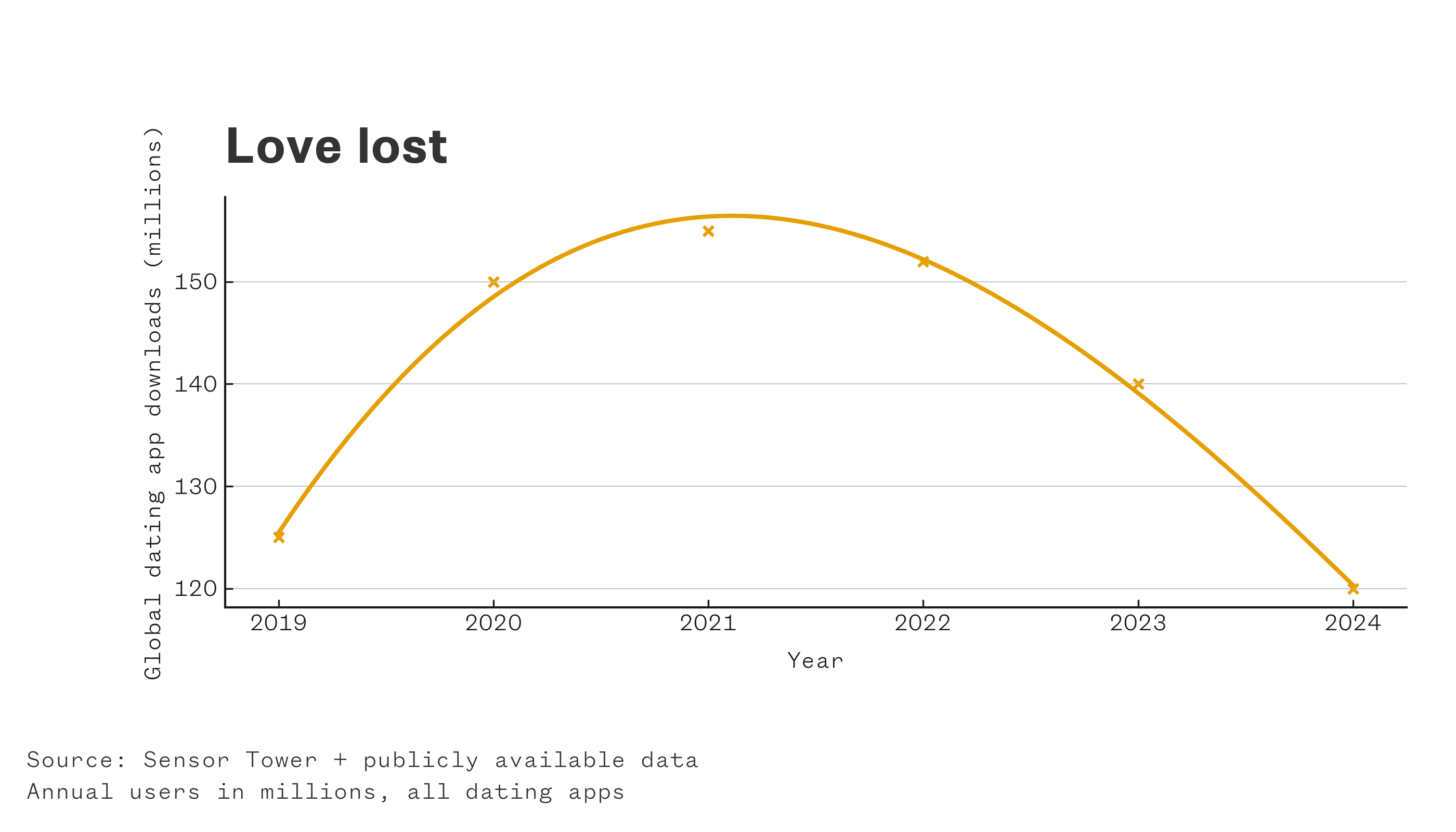
Dating apps peaked right around COVID. After that, people started opting out of the system entirely. While some apps are experiencing global expansion, here in the US every major last-generation dating app-Tinder, Bumble, Hinge-is in contraction.
This raises a question: since over 50% of people say they met their partner on a dating app, are we going back to meeting offline, or is something better around the corner?
Let’s break down how this happened:
1. People are overwhelmed by too many options
When everything feels possible, nothing feels meaningful. An endless stream of faces creates a sense of abundance that is powerful at first, but quickly becomes paralyzing. With so many choices, people second guess their decisions. They assume a better match is always one swipe away. They hold others to impossible standards. And they feel pressure to optimize instead of connect.
Instead of helping people move forward, the abundance stalls them. They end up stuck in a loop of browsing, comparing, and restarting conversations that never lead anywhere.
People are waking up to the cost of this. They want focused, intentional introductions instead of a carousel of nearly identical interactions.
2. Men and women are playing a different game
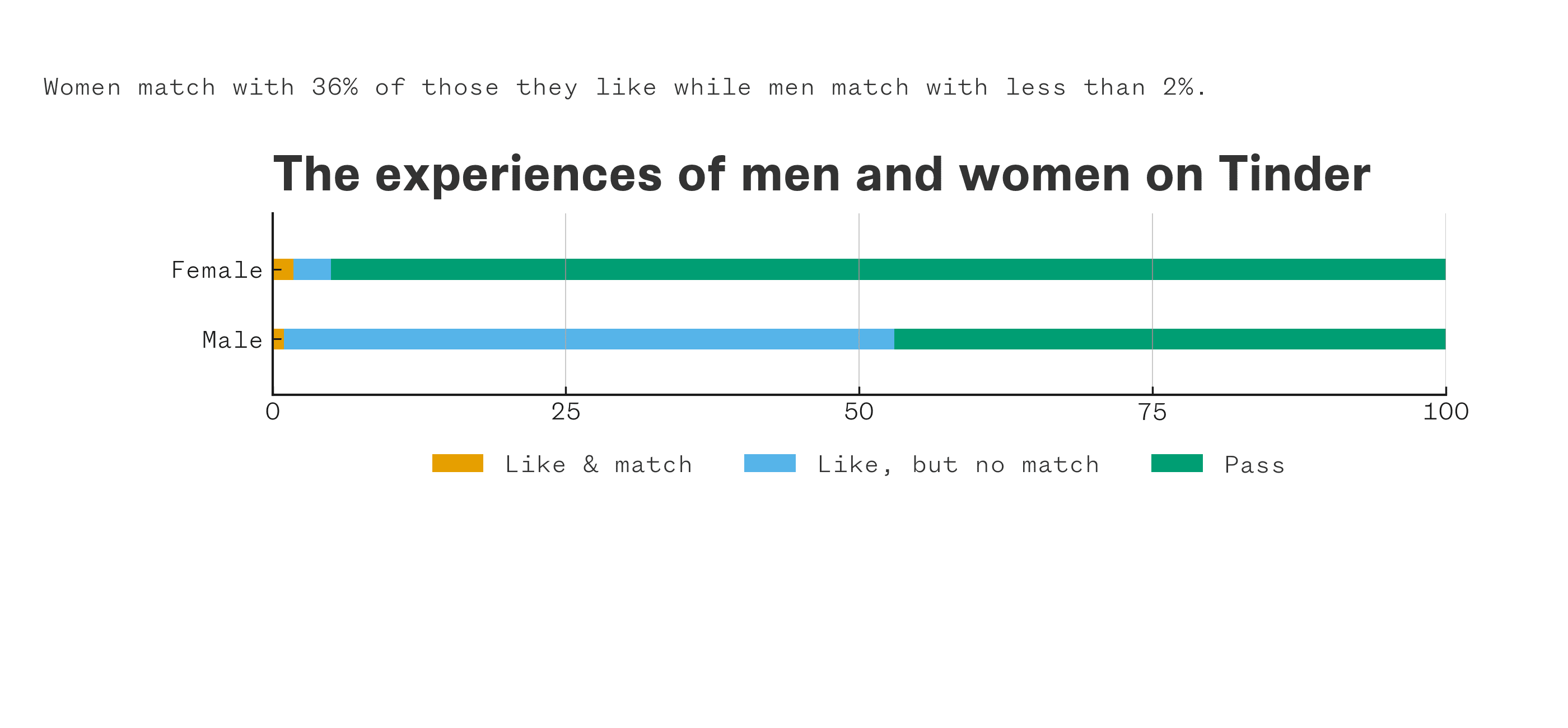
This is a generalization, but the data supports that men and women are utilizing the dating apps in materially different ways. On average, men swipe right 10x more often than women. Men are playing a numbers game while women are buried with a vast amount of options that they can’t make sense of.
Women: Feeling overwhelmed and opting out.
Men: Frustrated with an inability to stand out.
3. Profiles don't reveal true compatibility
Profiles are curated to get attention, not to reveal depth. People present polished versions of themselves because that is what the system rewards. And the algorithm pushes whatever keeps people swiping the longest. The result is predictable. High match counts. Low follow through. Short conversations. First dates that rarely turn into second ones.
Singles are realizing that compatible relationships do not come from dopamine hits. They come from self-awareness, thoughtful matching, and the courage to show up authentically. Swipe culture does not create the conditions for that.
Remember when a friend used to introduce you to someone for a date? Of course you don't-that was back in the 1980s.
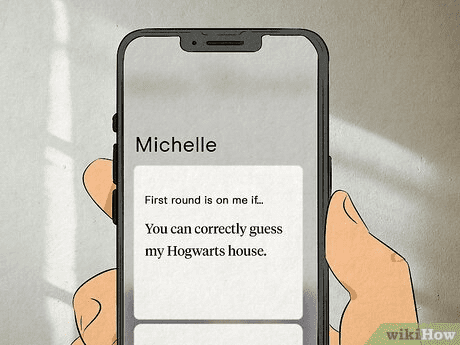
Jokes aside, that introduction was made by someone who knew both of you deeply. Your "gut" is a supercomputer processing thousands of data points to identify compatibility. When you're scanning hundreds of profiles, you simply can't process your fit with someone-even if the data were there. You're given basic demographics and three silly prompts. Telling someone which Hogwarts house you identify with doesn't indicate long-term compatibility.
4. There is no learning or clarity built into the system
Swipe culture gives people an endless supply of dates, but no insight into why things do or do not work. When a date doesn’t turn into a second one, the experience ends in silence. When someone disappears, there is no explanation. People have no idea what they are doing well or what they could adjust. They are stuck repeating the same patterns because the platform gives them no way to understand their own journey.
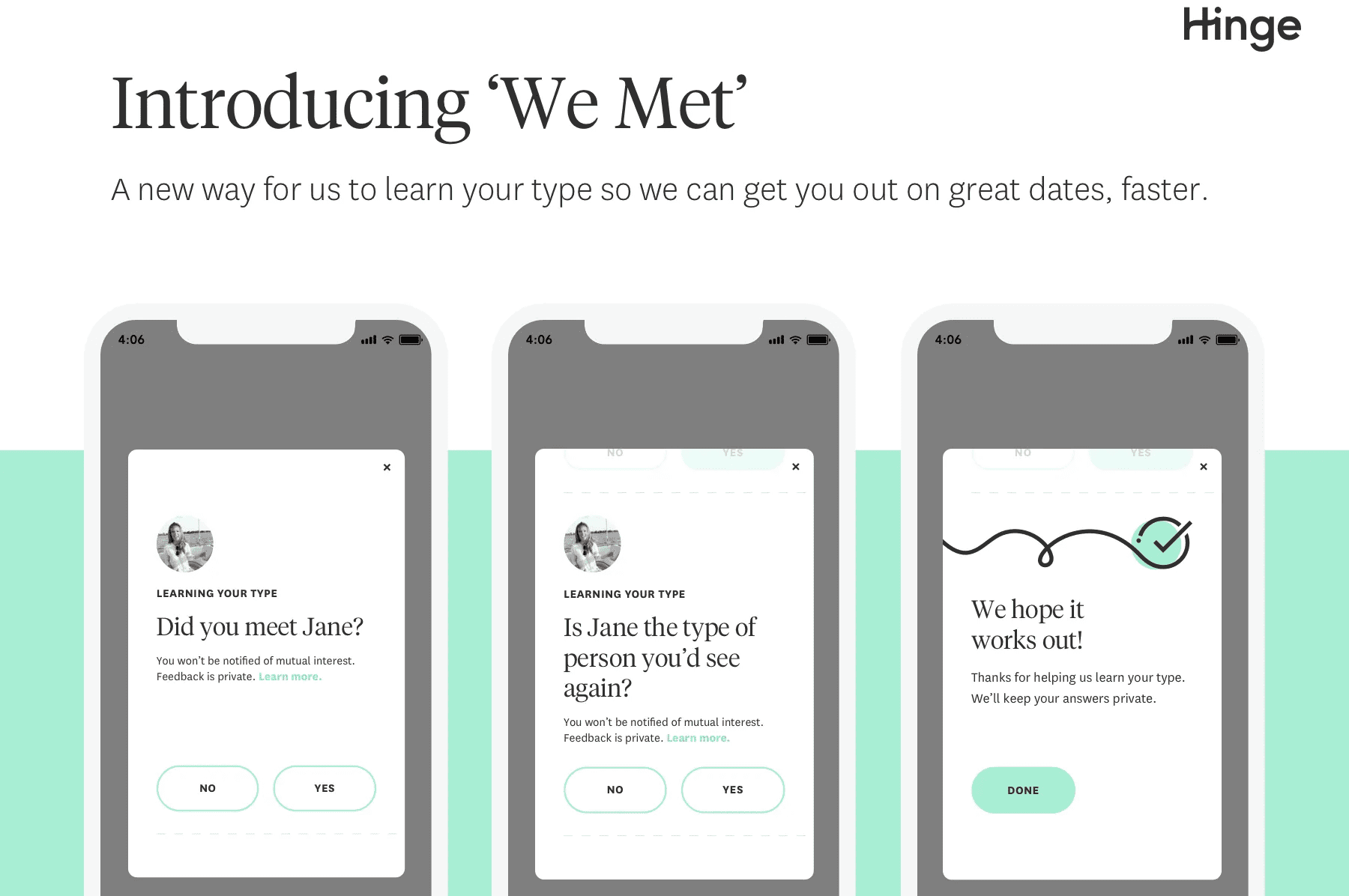
Platforms like Hinge attempt a feedback loop, but it's a simple yes/no based on shallow data. Learning that you typically go on second dates with Tauruses, cigarette smokers, or people between 6'1" and 6'3" is hardly useful.
Typical dating apps will make the same poor suggestions utilizing shallow data.
Without clarity, dating becomes guesswork. It becomes exhausting to invest in something that never provides feedback. People are not afraid of effort. They are afraid of wasted effort. And swipe culture forces them to invest without ever learning.
5. The emotional toll has exceeded the emotional reward
Dating apps used to feel fun. Now they feel like work. Many people describe the experience as draining, confusing, or lonely. Even positive experiences feel mixed with anxiety: why did that conversation die, why did that person stop responding, what did I do wrong. The system creates a constant sense of uncertainty that eats away at people’s confidence.
People want hope again. They want to date in a way that feels safe. They want a process they can trust.
6. People want to grow, not just meet more people
This is the part the industry has missed. People are not shallow. They are hungry for clarity and growth. They want to understand themselves better. They want to know their blind spots. They want to become the partner they hope to attract.
Swiping has no space for that. It treats dating as random chance instead of a journey of learning.
People are ready for something that actually helps them improve, not just consume.
What replaces swipe culture
The next era of dating will not be louder or faster. It will be more intentional. More supported. More human. People want fewer but higher quality introductions. They want someone in their corner who understands how difficult this is. They want feedback, not silence. They want a trusted partner that helps them learn from each experience so that no date feels wasted.
This is where Snug lives.
Snug provides the missing feedback loop. It turns dating into a clear process instead of a chaotic lottery. It gives people structured insights that help them see themselves accurately and make meaningful progress. It creates a community of intentional daters who share values, not just location.
Most importantly, Snug brings hope back to the journey. A reliable path forward. Real connection. Continued learning. Support every step of the way.
Swipe culture is collapsing because people are ready for what comes next.
They are ready for a process that works.